
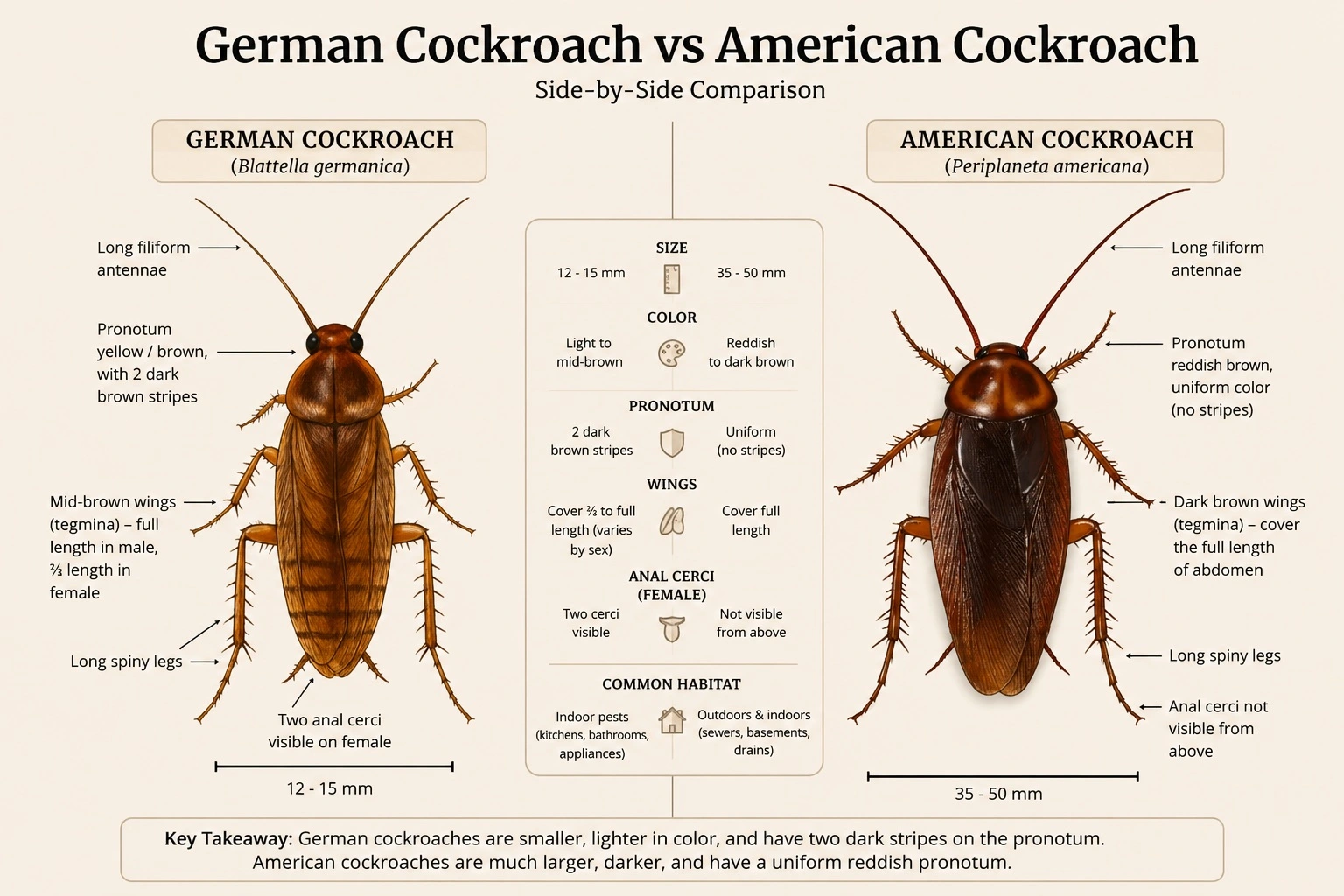
Seeing a cockroach indoors is stressful. Before you choose a trap, bait, or treatment, it helps to know what kind of cockroach you saw. The main clues in the German vs American cockroach comparison are size, color, where it was found, how it moved, and how fast it may reproduce.
German cockroaches are smaller, light brown, and often linked with warm, humid spaces such as kitchens. American cockroaches are much larger, reddish brown, and are often linked with damp, cool, dark areas such as basements and sewers.
These differences matter because each type may hide in different places. Knowing the likely species can help you inspect the right areas and choose a better control approach.
Quick Comparison: German vs American Cockroach
If you only saw the cockroach for a moment, start with the easiest clues. Size and location are often the fastest signs. Color, hiding spots, and behavior can also help.
- Size: German cockroaches are about 1/2 to 5/8 inch long. American cockroaches are about 1.5 to 2 inches long.
- Color: German cockroaches are light brown with two dark stripes. American cockroaches are reddish brown with yellowish margins.
- Common indoor areas: German cockroaches are often found in warm, humid areas such as kitchens. American cockroaches are often found in damp, cool areas such as basements.
- Hiding spots: German cockroaches often hide in cracks, crevices, and areas near food. American cockroaches prefer dark, moist places such as sewers.
- Flight ability: German cockroaches are described as not very good at flying. American cockroaches are described as very good at flying.
- Reproduction: German cockroaches are described as having a high reproduction rate and laying up to 40 eggs per egg case. American cockroaches are described as having a lower reproduction rate and laying up to 15 eggs per egg case.
- Control focus: German cockroach control often focuses on kitchens, food areas, cracks, and crevices. American cockroach control often focuses on damp, dark, and moist areas.
Correct identification matters because German and American cockroaches have different habits. A small roach near kitchen food debris may call for a different inspection focus than a large roach in a damp basement.
Size and Appearance Differences
Size is one of the clearest differences between these two cockroaches. German cockroaches are much smaller. They are listed at about 1/2 to 5/8 inch long.
If the roach you saw was small and near a kitchen cabinet, appliance, or food area, it may be a German cockroach.
American cockroaches are much larger. They are listed at about 1.5 to 2 inches long. Their larger size can make them easier to notice indoors.
Color is another useful clue. German cockroaches are light brown with two dark stripes. American cockroaches are reddish brown with yellowish margins.
Appearance alone may not be enough if you only saw the roach briefly. Try to think about the size, color, room, moisture level, and where it went to hide. These clues together give a better picture.
Where They Live and Hide Indoors
The place where you find a cockroach can tell you a lot. German cockroaches are often found in warm, humid areas such as kitchens. They are also linked with food sources.
For German cockroaches, inspect places where food, moisture, and small hiding spaces come together. The research points to cracks, crevices, and areas near food sources as common hiding spots.
A small light brown roach near a counter, cabinet gap, or food storage area may suggest German cockroach activity.
American cockroaches are more often linked with damp and cool areas such as basements. They also prefer dark and moist places such as sewers.
If you see large reddish brown cockroaches in lower parts of a building, damp utility areas, or near moist spaces, American cockroaches may be the better match.
These clues are not a guarantee. Cockroaches can move from one area to another. Still, the location of the sighting is one of the most useful details to note before choosing a control method.
Flight Ability and Behavior Clues
Behavior can help with identification, but it should not be the only clue. German cockroaches are described as not very good at flying.
If you see a small cockroach that mainly runs and slips into cracks or tight spaces, that may fit the German cockroach profile.
American cockroaches are described as very good at flying. Since they are also larger, their movement can be more noticeable indoors.
A large reddish brown cockroach that flies or moves through a damp, dark area may point toward an American cockroach.
Try not to rely on flight alone. Ask where it appeared, where it went, and what it looked like. A cockroach that hides in a kitchen crevice gives you a different inspection target than one seen in a basement.
Reproduction: Which Cockroach Spreads Faster?
Reproduction is one reason early identification matters. German cockroaches are described as having a high reproduction rate. They may lay up to 40 eggs per egg case.
American cockroaches are described as having a lower reproduction rate. They may lay up to 15 eggs per egg case.
This does not mean American cockroaches should be ignored. It means the two species differ in their reported reproduction rates. That can affect how urgent and detailed your inspection should be.
If you see cockroaches more than once, do not assume it is a one-time problem. Note the size, color, and location of each sighting. This information can help if you use traps, baits, insecticides, or professional pest control later.
Why Correct Identification Matters Before Treatment
German and American cockroaches have different preferences and behaviors. That can affect where you inspect and what control steps may fit the problem.
Regular inspections are recommended to help identify the cockroach species and choose the right treatment direction.
If the activity is mostly near kitchen cracks, food areas, or warm humid spots, German cockroaches may be more likely. If activity is in damp basements, dark moist areas, or spaces linked with sewers, American cockroaches may be more likely.
Good identification helps you focus your effort. It can also help a pest control professional understand what you have seen and where you have seen it.
Control Methods for German Cockroaches
German cockroach control often starts with careful inspection in kitchens and other warm, humid areas. Pay close attention to cracks, crevices, and places near food sources.
The control methods listed for German cockroaches include gel baits, traps, and insecticides. These methods are often used along with cleaning and removal of food and water sources.
Both German and American cockroaches are attracted to food and water. Cleaning spills, removing food debris, and fixing leaks can help prevent and control cockroach activity.
If you keep seeing small light brown cockroaches near food areas, do not focus only on the open floor or counter. Also inspect tight hiding places nearby.
Professional pest control may be useful if activity continues, if the problem appears widespread, or if you are not sure which cockroach you are seeing.
Control Methods for American Cockroaches
American cockroach control often focuses on damp, cool, dark, and moist areas. Basements and areas linked with sewers are common places to inspect.
The control methods listed for American cockroaches include baits, traps, and targeted insecticides.
Cleaning and moisture control still matter. Remove food debris, clean spills, and fix leaks where possible. These steps help reduce food and water access for both German and American cockroaches.
If you see large reddish brown cockroaches in damp lower areas of a building, inspect nearby dark and moist spaces. Repeated sightings may mean the source is hard to find without help.
Professional pest control may be a good option when sightings continue or when you cannot locate the main activity area.
Sanitation and Prevention Steps That Help With Both Species
Both German and American cockroaches are attracted to food and water sources. Simple cleaning steps can help reduce the things that draw them indoors.
- Clean spills as soon as possible.
- Remove food debris from counters, floors, and storage areas.
- Fix leaks to reduce water access.
- Clean regularly in likely hiding areas.
- Reduce clutter, especially in dirty or damp spaces.
- Watch items such as cardboard, paper, and fabric, since cluttered dirty places with these materials can become cockroach hotspots.
These steps do not replace proper treatment when cockroach activity is active or repeated. But they can support traps, baits, insecticides, inspection, and professional pest control.
When to Consider Professional Pest Control
Professional pest control may be useful when you cannot identify the cockroach, when sightings continue, or when the problem seems hard to control.
A professional can inspect the area, help identify the species, and suggest treatment based on where cockroach activity is found.
Professional help is one part of a broader control plan. Sanitation, regular inspection, and cleaning still matter. The better you understand where the cockroaches are active, the easier it is to focus control work in the right places.
FAQs
What is the main difference between a German cockroach and an American cockroach?
German cockroaches are smaller, light brown, and have two dark stripes. American cockroaches are larger, reddish brown, and have yellowish margins.
Which is bigger, a German cockroach or an American cockroach?
The American cockroach is bigger. It is listed at about 1.5 to 2 inches long. The German cockroach is listed at about 1/2 to 5/8 inch long.
How can I identify a German cockroach?
A German cockroach is small, light brown, and has two dark stripes. It is often found in warm, humid areas such as kitchens and may hide in cracks and crevices near food.
How can I identify an American cockroach?
An American cockroach is larger and reddish brown with yellowish margins. It is often linked with damp, cool, dark areas such as basements and sewers.
Where do German cockroaches usually hide?
German cockroaches often hide in cracks, crevices, and areas near food sources.
Where do American cockroaches usually hide?
American cockroaches prefer dark and moist places, including areas such as sewers. Indoors, they are often linked with damp, cool areas such as basements.
Do German cockroaches fly?
German cockroaches are described as not very good at flying.
Do American cockroaches fly?
American cockroaches are described as very good at flying.
Which cockroach reproduces faster?
German cockroaches are described as having a higher reproduction rate. They may lay up to 40 eggs per egg case. American cockroaches may lay up to 15 eggs per egg case.
Why does cockroach species matter for treatment?
Species matters because German and American cockroaches have different habits, hiding places, and preferred areas. This can affect where you inspect and what control approach may fit best.
What helps prevent both German and American cockroaches?
Cleaning spills, removing food debris, fixing leaks, reducing clutter, and inspecting likely hiding areas can help with both species.
Final Thoughts
The easiest way to compare German vs American cockroach sightings is to look at size, color, location, hiding spots, flight ability, and reproduction clues together.
A small light brown cockroach near kitchen food areas may suggest German cockroaches. A large reddish brown cockroach in a damp basement or dark moist area may suggest American cockroaches.
Once you have a better idea of the species, focus your inspection and control steps on the areas that match its habits. Keep food and water sources under control, clean regularly, and consider professional pest control if sightings continue or identification is unclear.